Water Damage Restoration in Houston
The leak is stopped, but floors, walls and cabinets are still soaked. Don't let the moisture sit. Call now for water extraction, structural drying and dehumidification in Houston.
Call (832) 743-6191 NowCalls answered 24/7 for Houston and South Houston.
What water damage restoration covers through this line
Restoration can mean different things to different companies. Through this number it means the mitigation stage: getting water out of the building and drying the structure so the damage stops spreading.
- Water removal and extraction from floors, carpet and pad
- Structural drying of subfloors, walls, baseboards and cabinet bases
- Dehumidification to pull moisture out of the air and materials
- Moisture detection and monitoring until materials reach dry readings
Repairs and rebuilding are separate. Replacing drywall, flooring, cabinets or trim, painting and other reconstruction work aren't offered through this number, and neither is mold remediation.
Signs the water has spread further than you can see
Water moves sideways under flooring and wicks up drywall, so the wet area is usually larger than the puddle was. Look for:
- baseboards or door trim that are swelling, separating or darker at the bottom,
- paint that bubbles or drywall that feels soft when pressed,
- wood or laminate boards that are cupping, lifting or squeaking in a new spot,
- carpet that stays damp or smells musty a day after the water was mopped up,
- a stain spreading on the ceiling below a bathroom, laundry room or attic air handler.
Any of these after a leak suggests moisture is still trapped, even if the surface looks dry. If there is still standing water on the floor, start with water removal in Houston.
Floors or walls still wet? Call now.
Get extraction and drying started. Say which rooms are affected and when the leak started.
Call Now: (832) 743-6191How structural drying works
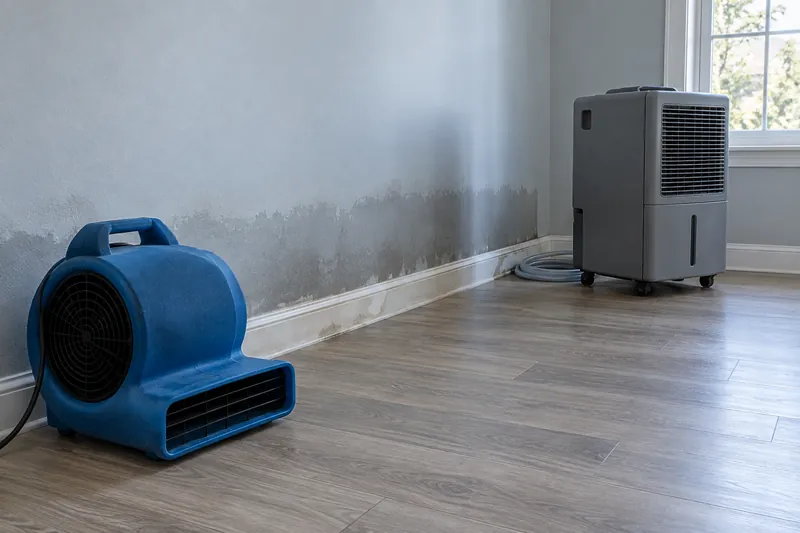
Drying a building is different from drying a floor you can see. The goal is to bring subfloors, wall cavities, framing and cabinet bases back to normal moisture levels, and that takes equipment working together over several days.
Air movers
High-velocity fans are aimed across wet surfaces to move moisture out of materials and into the air. They're placed along walls and under cabinets where water tends to collect.
Dehumidifiers
Once moisture is in the air, it has to be captured. Commercial dehumidifiers pull water out of the room air so materials keep drying instead of reabsorbing it. Refrigerant units are common in homes. Desiccant units work differently and can be useful in cooler or tightly enclosed spaces.
Moisture detection and monitoring
Moisture meters measure how wet drywall, wood and other materials are, and readings are compared with unaffected areas of the same building. Thermal cameras show temperature differences that can point to wet areas, but they don't see through walls, so readings are still confirmed with a meter. Repeat readings over the drying period show whether the structure is actually drying.
Drying out in Houston's humidity
The EPA recommends drying water-damaged areas and items within 24 to 48 hours to prevent mold growth. In a humid city like Houston, damp outdoor air works against that goal, which is why dehumidification is central to drying here.
Keep the house closed while drying equipment runs. Run the air conditioning only if the system and ductwork are dry and a qualified professional confirms it is safe. Do not run an HVAC system that may be wet or mold-contaminated, because it can spread contamination. Ask the provider whether to adjust the thermostat and which interior doors to keep closed.
Stop the damage from spreading. Call now.
Get drying set up for your rooms, and ask how the job is checked before the equipment comes out.
Call Now: (832) 743-6191Questions to ask before drying starts
- How will you find out how far the water has spread?
- What equipment will you set up, and roughly how many days do you expect it to run?
- How often will moisture readings be taken, and will I get a record of them?
- What will you need from me while the equipment is running?
- How is the work priced, and what is included?
Readings and photos taken during drying can also be useful if you file an insurance claim, so ask what documentation you'll receive.
Insurance and documentation
Whether a policy pays for water damage depends on the policy and on the cause. A sudden pipe break is often treated differently from a slow leak or from flooding. Before anything is thrown away, photograph damaged items and wet areas, and note the date and time the water was found.
If the water came in from outside during a storm, see flood cleanup in Houston. Flood damage is usually handled under separate flood insurance.
Water damage in offices, shops and rentals
Water in a business or rental unit brings extra concerns: tenants or staff, stock, equipment and how long the space is out of use. If the property isn't a single-family home, say so when you call so you can confirm whether it can be handled through this line and what access would be needed.
Water damage restoration questions
How long does it take to dry a house after water damage?
It depends on how much water there was, what got wet and how long it sat before drying started. Drying commonly runs for several days, and dense materials such as hardwood or a concrete slab can take longer. Moisture readings, not the calendar, show when drying is complete.
Is water damage mitigation the same as restoration?
Mitigation is the first part of restoration: removing water and drying the structure to stop further damage. Repair and rebuilding come afterward. Through this line, the service is mitigation: extraction, drying, dehumidification and moisture monitoring.
Can I stay in my home while drying equipment runs?
Often, yes, if the water was clean and the affected area is limited. The equipment is noisy and warms the room, so many people keep the doors to that area closed. Contaminated water changes that answer, so ask about your situation when you call.
What affects the cost of water damage restoration?
The size of the wet area, how many rooms and materials are involved, whether the water was clean or contaminated, and how many days equipment needs to run. Ask how drying is priced and what's included before you agree to the work.
Water damage in Houston? Call now for extraction and drying.
Get the water out of your floors, walls and cabinets before the damage spreads.
Call (832) 743-6191